The trial is the visible part. Pick a tool like CodeRabbit, Greptile, Qodo or Copilot, install the GitHub App, and within an hour it’s leaving comments on your pull requests.
For anyone leading a medium-to-large engineering team, the demo only answers the easy question. The harder one is who controls the rules tomorrow – and that’s the question that splits build from buy. But before weighing either option, the second engineer deserves a closer look.
Your team is already doing AI review
That engineer is not an outlier. While you’re evaluating vendors, or if you’ve outgrown your current tool, people across most orgs are piping diffs through the desktop agent they use for everything else, skimming the output, and pasting the good comments into the PR.
It’s understandable, and it breaks the one thing PR approval is supposed to mean. When a reviewer approves a change, the org is recording that a human weighed it. Once model comments ship under human names, that record is unreliable. You can’t tell a considered approval from a laundered one, and neither can the incident review six months later that’s trying to work out who actually looked at the migration.
The secondary costs follow from there. Each engineer’s agent applies whatever conventions live in their local setup, so "review standards" fragment per laptop, and none of it accumulates anywhere the org can see, version, or correct.
This is the status quo any build-vs-buy decision replaces: ad-hoc, unattributed AI review, fragmenting one laptop at a time. The bought tools fix the attribution problem on day one, which is a genuine point in their favour. Where their judgement comes from is the more complicated part.
What buying gets you
The bought tools are good at what they do. Fast setup, polished PR integration, cost controls, comments that arrive under the bot’s name, and review quality that keeps improving as the underlying models improve. For a team of ten with no written conventions, they’re probably the right call and you can stop reading here.
But look at where their judgement comes from. Out of the box, an off-the-shelf reviewer evaluates your code against the model’s training data: the aggregate opinion of public GitHub. That opinion knows nothing about your architecture decision docs, the naming convention you settled after a three-week argument, or the incident last quarter that led you to ban a whole class of query pattern.
The vendors know this, which is why most now offer custom rules. CodeRabbit has a config file, Greptile learns from your reviewers’ comments. It helps. But your rules live inside their system, expressed in their format, evaluated by their harness. You’re configuring someone else’s product rather than encoding your organisation’s knowledge somewhere you own it. At ten engineers that distinction is academic. At fifty, it is the decision itself.
Centralised rules for the win
At 30, 50, 100 engineers, review consistency stops coming from individuals and has to come from encoded organisational knowledge, living in one versioned place that every review reads on every PR.
And rules, here, doesn’t mean lint rules. Formatting and static checks are a solved problem with deterministic tooling. It means the judgement layer above them: the reasoning behind your style guide, your security policies, decision docs, the incident learnings no linter can express. That layer is written as prose, and the model reads it alongside every diff.
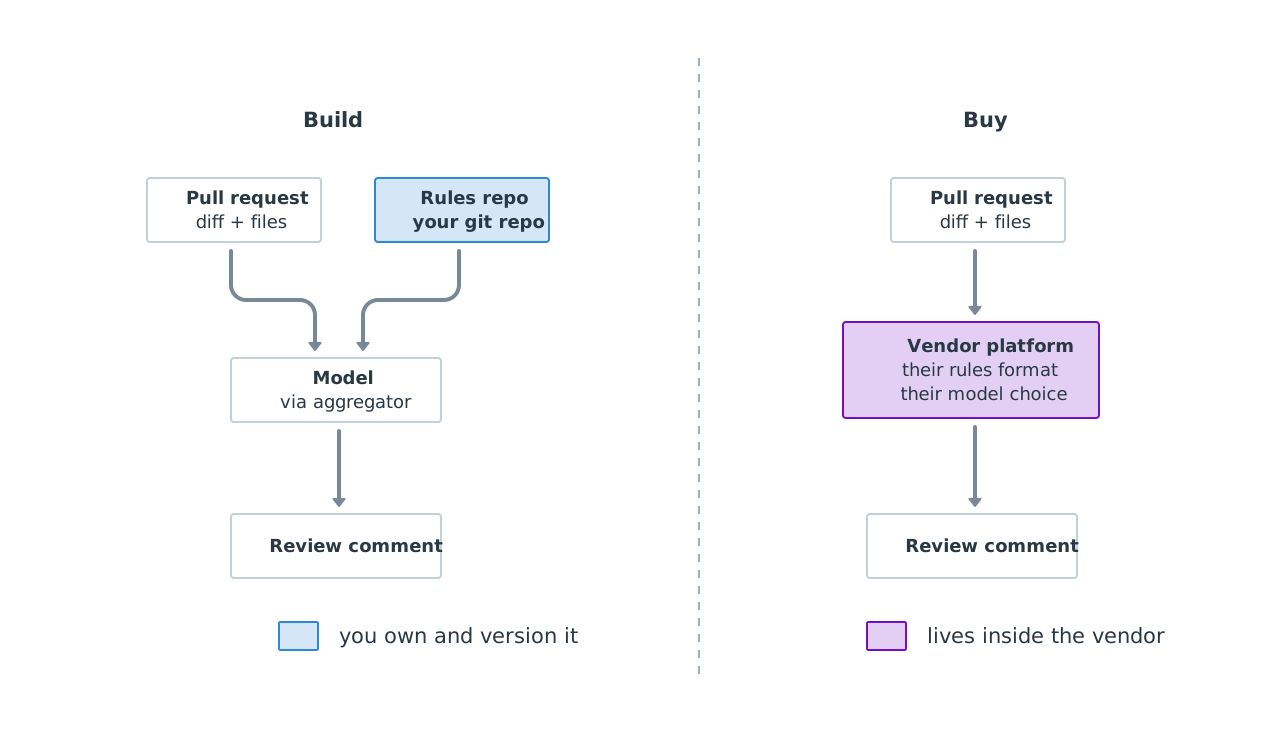
When the rules source is yours, three things follow:
Rules changes ship like code. An engineer proposes a new convention as a PR to update the review skill. It gets reviewed, merged, and lands in every subsequent code review across every team. No admin console, no per-repo config drift.
The same source feeds everything. The rules that drive AI review also feed your coding agents. The convention that tells the reviewer "flag raw SQL in service handlers" is the same file that tells Claude Code not to write it in the first place. Vendors can’t do this, because their rules only exist inside their review product.
Nothing is trapped. When you leave a bought platform, your accumulated rules and reviewer feedback stay behind. When your rules are markdown files in a repo, they outlive any tool decision you make.
Built means model-agnostic. Bought means resold.
The second argument is about the models themselves.
A bought platform picks the model for you, wraps it, and resells it inside their subscription. When a better model ships, and one ships every few months, you wait for the vendor to evaluate it, integrate it, and pass it through on their schedule and their margin. You’ve bought code review. What you’re paying for is someone else’s model procurement.
Build behind an aggregator and the relationship inverts. Route your review harness through OpenRouter, Bedrock, Cloudflare, LiteLLM, or Vercel’s AI Gateway and switching from Claude to GPT to Gemini is a one-line config change. New frontier model ships on a Tuesday, you’re reviewing PRs with it on Wednesday. You can also A/B models against your own rules, which no vendor benchmark tells you: their evals measure generic bug-catching, not how well a model applies your conventions.
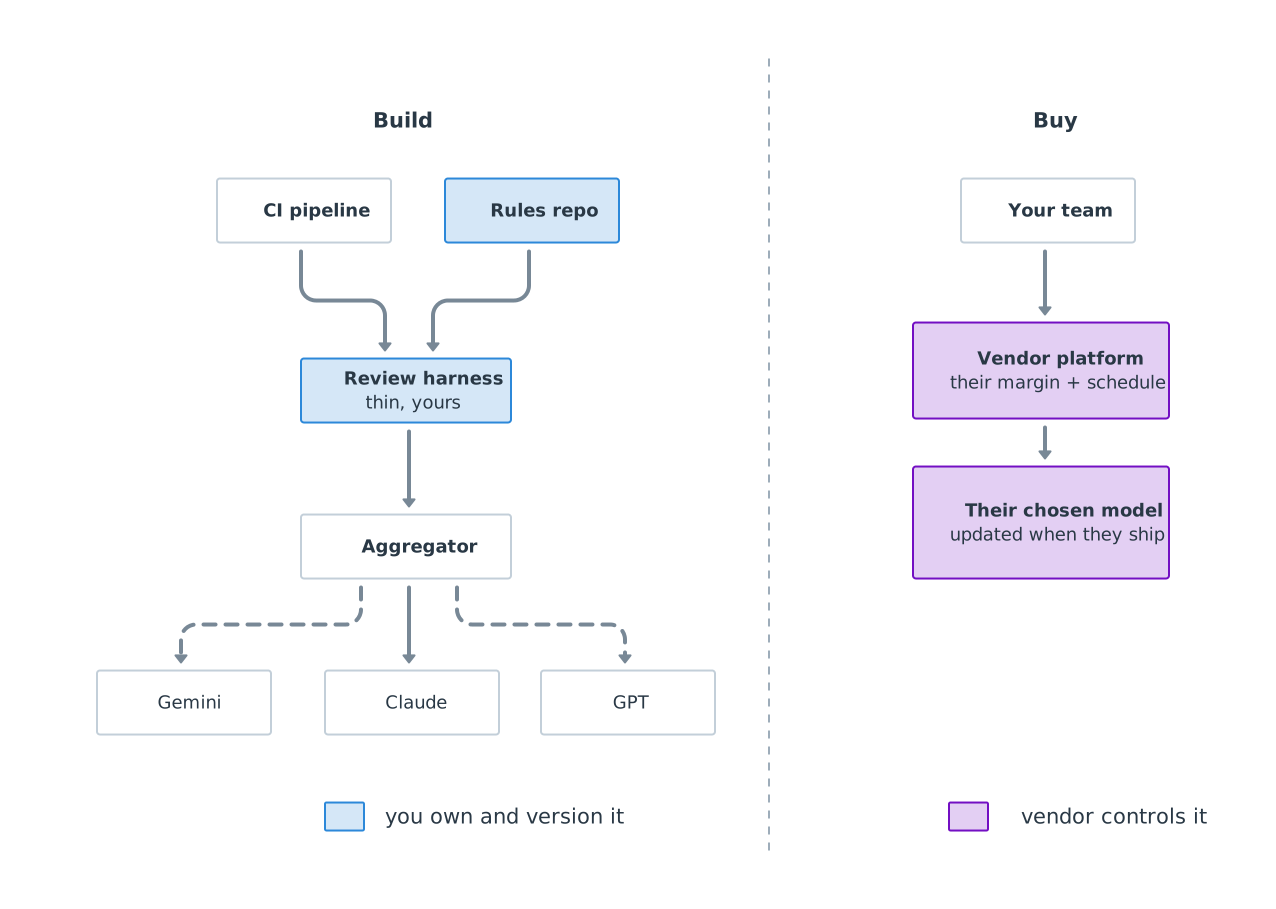
Model quality is the fastest-moving variable in the equation. A vendor’s release cycle means paying a margin to move slower on exactly that variable.
What the build "costs"
The harness is thin: a CI hook that fires on PR events, a loader that pulls the relevant rules for the changed files, a prompt that combines diff, context/rules, and an aggregator call.
The ongoing cost is real but it’s the useful kind. Someone owns the rules repo. Prompts get tuned when reviews miss things. Rules get pruned when they generate noise. Call it maintenance if you like, but it amounts to your organisation deliberately curating its own engineering standards, which is work a team your size should be doing anyway. The rules then show up as comments on every PR, rather than sitting in a document nobody opens.
My recommendation
Small team, no written standards, want review lift this week: buy. CodeRabbit or Greptile will serve you well. Better yet, if you’re on GitHub + Claude Code leverage Claude Code Review and land somewhere in the middle.
Medium-to-large team with real conventions, decision docs, and opinions about how your code should look: build the thin layer. Record your rules, route the models through an aggregator, and treat review intelligence the way you treat the rest of your infrastructure: rented compute, owned configuration.
There's a strong case for owning the rules while renting the models. But whichever path you choose, the unattributed AI reviews already happening on your team deserve some daylight – and of all the trust problems you could tackle, attribution is probably the cheapest.